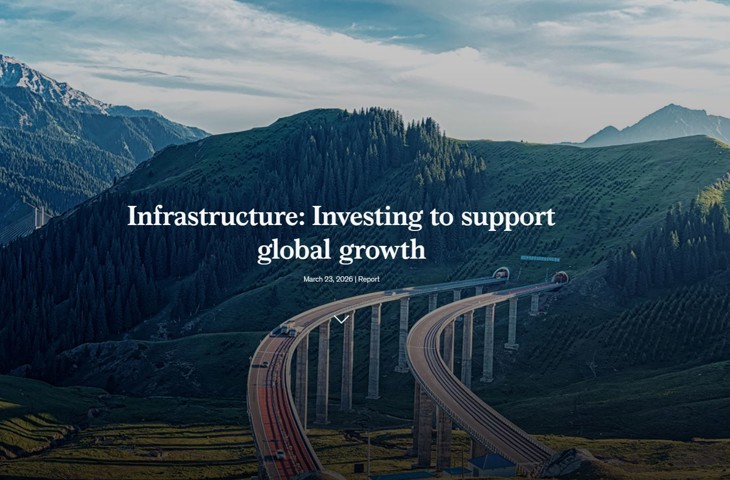
In 2021, the EU made a legally binding commitment to be climate neutral by 2050, positioning it as the first – and only – political bloc to set such an ambitious goal. There are challenging interim targets, with the EU aiming to reduce greenhouse gas emissions by at least 55% by 2030 versus 1990 levels, and 90% by 2040, all fuelled by a huge shift into renewable energy.
Since enshrining its target into law, energy shocks caused by wars in Ukraine and the Gulf have given Europe’s renewables drive new impetus and focus. What was initially intended as a target for a greener ‘continent’ is increasingly central to a more strategically secure and competitive Europe. Data released earlier this year shows that the EU’s energy dependency rate was 57% in 2024, meaning that well over half of the EU’s energy supply came from outside the bloc[1]. This dependence is concentrated in the fuels most exposed to geopolitical disruption: oil and petroleum products accounted for 67% of EU energy imports in 2024, while natural gas accounted for a further 24%. Reducing import dependence therefore means adding renewable generation and electrifying end-use demand so that imported molecules can be replaced by domestically generated electrons. Of major economies, only Japan and South Korea had higher energy dependencies; the US, by contrast, was a significant net exporter of energy.
That strategic shift plays out across three fronts: the capital needed to build renewable capacity, the grid investment needed to deliver it reliably, and industrial competitiveness.
In an unpredictable world, renewable energy infrastructure is the best route toward a Europe which is no longer reliant on volatile fossil fuel imports, and which can meet its long-term climate ambitions. Unsurprisingly, this will require significant capital. Estimates put the aggregate investment needed at €1.5 trillion by 2050 to support a tripling of renewable energy capacity[2]. Wind, solar and hydro form the backbone of this build-out, complemented by bioenergy and geothermal; nuclear innovation adds a further dimension to the mix.
It should be noted that Europe’s energy needs are increasingly electricity needs. Apart from building more renewable capacity, it must also accelerate the electrification of transport, heat and industry. The Commission has therefore introduced a KPI for electricity to reach 32% of final energy consumption by 2030, alongside an Electrification Action Plan covering transport, industry and buildings.
Energy sovereignty will not be achieved generation asset by generation asset. It requires a European system: stronger distribution grids, more cross-border interconnection, storage, smart-grid technology and demand flexibility. Without these, renewable abundance in one region cannot reliably support industrial demand in another. This demonstrates that Europe’s renewables future is also about energy reliability. The International Energy Agency estimated that Europe’s annual grid spending would top $70 billion in 2025, double that of a decade earlier[3]. By 2030, many of the continent’s energy grids will be over 40 years old, meaning that much more investment will be needed.
Then there are the huge requirements – and opportunities – for industry. A key pillar of the Draghi proposals released in 2024 is mobilising €100 billion for clean manufacturing, such as “green steel” made with renewable energy. Add the EU’s burgeoning ambition in AI – which includes five gigafactories and 19 smaller AI factories all with their associated data centre and energy needs – and the demand for renewable energy can only increase. It also means that Europe’s renewable energy agenda is now fundamentally tied to competitiveness, industrial resilience, and strategic autonomy.
However, it should be well noted that a sovereign energy system cannot simply replace dependence on imported fossil fuels with dependence on imported clean-tech components and critical minerals. Batteries, solar panels, wind turbines, grid equipment and electrolysers all rely on supply chains that Europe is now seeking to secure through the Critical Raw Materials Act and the Net-Zero Industry Act. For investors, this broadens the opportunity set from generation assets to storage, grid components, recycling, clean manufacturing and enabling services.
European infrastructure funds are well placed to contribute and benefit. Invest Europe’s Building Europe’s Foundations: The Role of Private Capital in Infrastructure report showed that from 2020 to H1 2025, infrastructure funds raised €265 billion in Europe. Of this total, €41 billion was raised in the first half of 2025 alone, highlighting recent industry growth in terms of capital raised and number of active funds. Over the five-and-a-half years, funds invested €167 billion in Europe, with renewable energy the largest investment sector by a clear margin since 2023.
For investors, there are opportunities in large, mature renewables assets, as well as mid-market investments that can be scaled into larger platforms, and technologies and services targeted at end users’ energy consumption. Returns have been compelling with Invest Europe performance data showing net Internal Rate of Returns of 8.83% since inception, well ahead of the MSCI Europe Infrastructure benchmark return of 5.59%.
More investment capital flowing from long-term investors will always be welcome, and the creation of the EU’s Savings and Investments Union is an absolute priority. However, some of the largest hurdles today lie in regulatory unpredictability and permitting complexity. Electricity grids can take around 10 years to completion, about half of which is swallowed up by permitting. Similarly, permits for renewable energy can take up to nine years depending on the member state[4].
Proposals recently approved by MEPs could dramatically speed up permitting and grid connections, strengthen the presumption of over-riding public interest for renewable energy projects and electricity grids, and increase the thresholds for seeking permits in the first place. Like the processes they seek to overhaul, these measures should be fast-tracked to enable capital to flow where it is needed. Quicker permitting can derisk projects and raise target returns, drawing in more private capital to drive Europe towards its goals.
What began as a climate commitment has become a strategic imperative: energy security now demands the very infrastructure build-out that decarbonisation always required. For European infrastructure funds, that convergence represents a rare alignment of purpose and opportunity, and the infrastructure sector is well placed to rise to it.
Frank Amberg
Member, Limited Partners Platform Council, Invest Europe
Managing Director, Head of Infrastructure Germany, AltamarCAM Partners
[1] https://ec.europa.eu/eurostat/web/products-eurostat-news/w/wdn-20260318-
[2] https://www.renews.biz/other-news/europe-needs-e1-5tn-renewables-investment-by-2050/
[3] https://www.eib.org/en/stories/electricity-grids-investment
[4] https://www.europarl.europa.eu/news/en/press-room/20260629IPR46207/electricity-grids-meps-back-plans-to-accelerate-energy-project-permit-process
Want to discuss?
We are always keen to hear from you.
Related


MEMBER ONLY
Venture capital and private equity investors’ impact on the growth and sustainability of Finnish companies
External resources
30 Sep 2025

Invest Europe calls for more pension fund investments into PE/VC/infrastructure
Press releases
28 Aug 2025

Invest Europe Leader Interviews: Frank Amberg, AltamarCAM Partners
Videos
02 Jul 2025

MEMBER ONLY
Contracts with (Social) Benefits: The Implementation of Impact Investing
External resources
08 Apr 2021

MEMBER ONLY
Invest Europe webinar: Value creation in the context of impact investing
Webinars
09 Sep 2025

MEMBER ONLY
Impact Investing Call 3: Fiduciary duties
Policy calls
12 Sep 2024