
Sort: by Relevance
Relevance
Date
Filter: by Year
All Years
2026
2025
2024
2023
2022
2021
Earlier
Featured

Member Only
Report on Investment Activity 2025
The statistics in this report are the results of the UK Private Capital’s Investment Activity Study, covering fundraising, business investments and business exits.
External resources
05 May 2026
Private Equity at Work report (2026)
Detailed evidence and analysis of the European private equity and venture capital industry’s real contribution to employment, in 2024, and job creation, in 2023-24, and the far-reaching impact this has on the people, societies and economies of Europe.
Data and insight
30 Apr 2026

Private Equity at Work 2026: National factsheets
Download the factsheets to see the European private equity and venture capital industry’s real contribution to employment, in 2024, and job creation, in 2023-24 in Belgium, Poland, Norway and Sweden.
Data and insight
30 Apr 2026

Position on the European Biotech Act I
Europe stands at a crossroads for biotech and healthcare, as it continues to lose companies, capital, talent and clinical activity to more competitive ecosystems abroad. The European Biotech Act I’s delivery must be comprehensive and future-proof. Invest Europe’s position sets out how the Act can become a true end‑to‑end ecosystem strategy. Without addressing remaining structural bottlenecks, Europe risks continued underperformance in a sector that is central to competitiveness, health security and strategic autonomy.
Positions & consultation responses
29 Apr 2026

Member Only
Webinar - AI as value creator for PE/VC sustainability teams
AI is at the centre of today’s conversations in private equity—but where does it truly add value?
Webinars
28 Apr 2026

Member Only
Investing in tomorrow: Private capital’s role in the green transition
This report sets out to demonstrate the important role private capital plays in supporting the green transition in the UK.
External resources
21 Apr 2026

Response to EIOPA Consultation on insurance undertakings and private equity
In this response we highlight to European Insurance and Occupational Pensions Authority (EIOPA) our concerns that focusing draft supervisory statement specifically on private equity ownership models would create a de facto two-tiered regime which, in effect, would apply a higher, more onerous standard to a private equity acquirer.
Positions & consultation responses
20 Apr 2026

Response to European Commission Consultation on the Competitiveness of Banking
In this response, EU policymakers should use the forthcoming revision of the banking framework, as suggested by the European Council, to introduce targeted and proportionate changes to the credit risk treatment of diversified long-term equity exposures under Article 133 of the Capital Requirements Regulation.
Positions & consultation responses
20 Apr 2026

Response to the European Commission Consultation on Private Equity Exits
Weak IPO markets, fragmented capital markets, regulatory complexity and limited institutional capital continue to constrain exits across the investment lifecycle. While a private intermittent trading platform could play a complementary role in selected cases, Invest Europe's response stresses that any such solution must remain proportionate, issuer‑controlled and market‑led - and must not undermine the fund‑based model that underpins private investment in Europe.
Positions & consultation responses
17 Apr 2026

Position on the draft 2027-2034 General Block Exemption Regulation (GBER)
The GBER plays a central role in shaping how State aid mobilises private capital to support innovation, growth and competitiveness in Europe. While the Commission’s draft for the 2027-2034 period introduces welcome flexibility, Invest Europe’s position highlights remaining structural misalignments that risk excluding viable, PE/VC‑backed companies from support.
Positions & consultation responses
17 Apr 2026
Member Only
EIF Equity Barometer Q1 2026
The survey shows that market sentiment softened in Q1 2026 amid heightened geopolitical uncertainty linked to the escalation of the conflict in the Middle East.
External resources
17 Apr 2026
Member Only
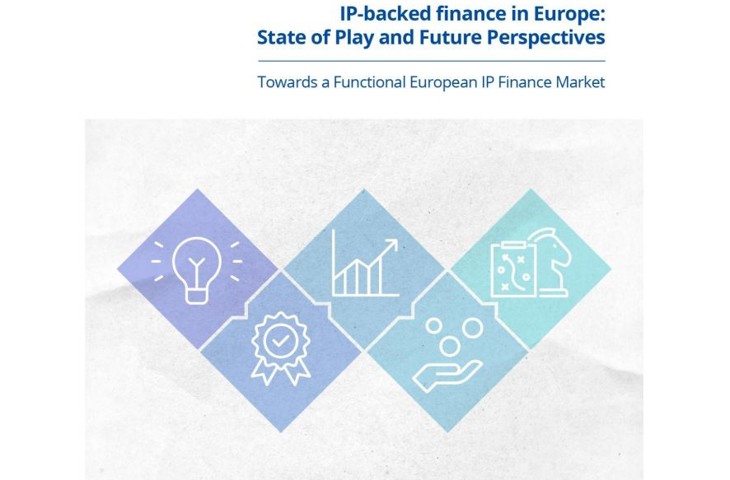
IP-backed finance in Europe: state of play and future perspectives
IP-backed finance in Europe: state of play and future perspectives
External resources
13 Apr 2026

Position Paper on the Omnibus on taxation
This paper sets out Invest Europe’s views on the European Commission’s Omnibus initiative to simplify EU direct taxation, highlighting the challenges posed by complexity, fragmentation, and inconsistent implementation across Member States. It provides targeted policy recommendations to streamline tax rules, reduce administrative burdens, and support efficient cross-border investment, competitiveness, and sustainable economic growth in Europe.
Positions & consultation responses
30 Mar 2026

Member Only
ESG KPI report 2026
The Invest Europe ESG KPI Report is the first annual ESG and sustainability data survey to track the industry’s efforts in tackling issues such as climate change, female under-representation and bribery and corruption. Through this initiative – alongside the creation of Invest Europe’s ESG Reporting Guidelines – European private equity can become an undisputed leader and standard setter on ESG measurement and reporting across the global private capital industry.
Data and insight
26 Mar 2026

Member Only
Inside the Independent Sponsor Market
The Independent Sponsor model has clearly moved beyond “emerging”, it is now a meaningful segment of the private equity ecosystem.
External resources