
Sort: by Relevance
Relevance
Date
Filter: by Year
All Years
2026
2025
2024
2023
2022
2021
Earlier
Featured

Position Paper on the Market Integration Package
The Market Integration package takes meaningful steps toward removing long-standing barriers that have hindered fund managers’ ability to operate cross-border, while reflecting on the diversity of EU market. Nearly all of the proposed amendments on asset management will help usually small private equity, venture capital and infrastructure managers to operate more efficiently across the Union – and will therefore unlock capital for the companies they support.
Positions & consultation responses
24 Mar 2026

Member Only
2026 DeepTech Report
The report covers funding trends, key technologies, founder resources, and structural challenges highlighting deep tech as Europe’s largest and most vital venture category.
External resources
23 Mar 2026
Member Only
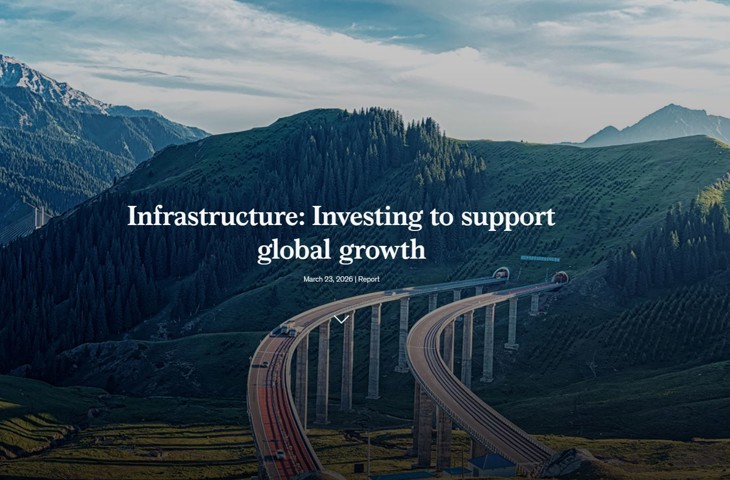
Infrastructure: Investing to support global growth
A cumulative $106 trillion in investments is imperative to meet global infrastructure requirements through 2040. Private capital’s role in meeting the world’s growing need for infrastructure continues to grow, with record fundraising and deployment in 2025.
External resources
23 Mar 2026

Tax obstacles for cross- border remote employees
In the context of start-up and scale-up strategy, fragmented EU tax rules complicate equity-based compensation, limiting talent mobility and cross-border growth. This position paper outlines harmonised solutions, including deferred taxation, common equity instruments, and the 28th regime (“EU Inc”), to support scalable, pan-European growth and long-term value creation.
Positions & consultation responses
20 Mar 2026

Invest Europe CEO letter to EU Heads of State - Europe’s Moment of Decision
The letter calls on EU leaders to take bold EU actions to overcome the EU's competitiveness challenges, ahead of the 19-20 March EU Council. It has been by co-signed by more than 110 venture capital, private equity and infrastructure firms.
Positions & consultation responses
Other publications
19 Mar 2026

Responses to European Commission Consultations on Venture and Growth funds
In this response to a European Commission consultation, Invest Europe, alonsgide most national VC and PE associations, makes the case for a revised architecture of the AIFMD and EuVECA marketing and management passports, alleviating rules for long-term equity managers and making it easier for them to market and manage funds cross-border.
Positions & consultation responses
18 Mar 2026

Invest Europe Highlights 2025
In 2025 we continued to support our industry through unpredictable global conditions, while making the case for private capital at the highest policy levels in Europe. This year, there are also snapshots of our work on behalf of different communities – large buyouts, mid-market private equity, venture capital and infrastructure – in addition to the achievements of each Invest Europe department.
Other publications
17 Mar 2026

Position on the Scope of the Leaked 28th Regime Corporate Legal Framework (EU Inc.)
The leaked draft of the 28th regime (EU Inc.) reflects the right objective, but its current scope and ambition risk limiting its effectiveness. Narrow definitions of innovation and growth, rigid thresholds, and inconsistencies with EU frameworks could exclude many of the companies it is meant to support. Addressing these shortcomings will be essential to ensure the regime drives uptake, reduces fragmentation, and delivers meaningful benefits for companies and investors.
Positions & consultation responses
17 Mar 2026
Position on the SME definition
With the SME definition currently under revision, the EU has a key opportunity to address a framework that misclassifies PE- and VC-backed companies as part of larger corporate groups, stripping otherwise eligible firms of SME status - and related incentives - solely due to their ownership structure. Recognising the independence of private capital-backed companies would incentivise SMEs to access private capital while reinforcing a more attractive investment environment, ultimately strengthening Europe’s innovation capacity and addressing its scaleup gap.
Positions & consultation responses
17 Mar 2026

Response to the European Commission consultation on Simplification: digital package and omnibus – DORA comments
The Digital Omnibus proposals on DORA, such as the single EU incident‑reporting entry point, are a positive and pragmatic step towards a more coherent, efficient and proportionate digital resilience framework in the EU.
However, broader adjustments are still needed to ensure that DORA is workable for private capital managers and does not undermine the EU’s ambition to boost private investment, innovation and growth. In particular, DORA must better recognise the specific characteristics of long‑term, closed‑ended equity funds and avoid imposing on them ICT regimes designed for very different business models.
Positions & consultation responses
13 Mar 2026

Consultation response on the new European Climate Resilience Framework
In this paper, prepared in response to a European Commission public consultation, we set out our views on the new European Climate Resilience Framework.
Positions & consultation responses
23 Feb 2026

Taxation in Europe
Investors’ perspective on getting it right.
Positions & consultation responses
19 Feb 2026
Invest Europe Position Paper on SFDR 2.0
This paper sets out Invest Europe's overall assessment of the European Commission’s SFDR 2.0 proposal, highlighting both its key strengths and the remaining challenges, particularly from a PE/VC perspective. It also provides targeted recommendations aimed at addressing these concerns and enhancing the effectiveness of the revised framework, ensuring it remains proportionate and adaptable to the diversity of asset classes, business models, and investors within its scope.
Positions & consultation responses
18 Feb 2026

Position Paper on the Supplementary Pensions Package
The Institutions for Occupational Retirement Provision (IORP) Directive review offers an opportunity: decoupling the concept of prudence to investments in specific types of assets or sectors - notably listed or daily-traded instruments.
Prudence should be seen holistically. IORP – and the national legislation implementing it in practice - should designed to invite pension funds to construct well-diversified portfolios which meet their long-term liabilities, not portfolios that are mostly made up of low value, short-term assets.
Positions & consultation responses
13 Feb 2026

Position Paper on possible recast of DAC6 and ATAD3
Invest Europe welcomes the opportunity to contribute to the evaluation and recast of the DAC6 and the potential integration of the Unshell Directive (ATAD3) into a simplified framework. While recognising that DAC plays an important role in enhancing tax transparency and combating aggressive cross-border tax planning, Invest Europe highlights that the current application of DAC6 across Member States is fragmented and imposes disproportionate administrative burdens on intermediaries and investors.
Positions & consultation responses