What is materiality?

Materiality is the principle of defining the social and environmental topics that matter most to your business and its stakeholders. Critically, considering the many geographical, political, and environmental variables that companies face, materiality aspects can vary widely and will differ across industries, business models, and even individual companies. For example, though governance factors – such as shareholder rights, board composition, and executive compensation – are generally applicable across sectors and industries, not all environmental or social factors are equally material for all companies.
As set out in detail below, in the private equity and venture capital context, ‘materiality’ comes up in two different contexts. First, materiality may be assessed by GPs to understand the ESG-related risks and opportunities of potential or existing investments. Second, materiality may be assessed by companies looking to determine the most material ESG risks and opportunities to their business and potentially their industry more broadly.
In practice, materiality is a dual concept (“double materiality”), that includes “Financial materiality” and “Environmental & Social materiality”.
Financial materiality encompasses any ESG factors that might have a real-world impact relevant to a company’s financial performance. In layman’s terms, materiality is a way of considering what aspects of ESG could have a significant, financial impact on an organisation.
While it is true that materiality can be interpreted in different ways by different investors, it is worth noting that many jurisdictions use a similar definition of financial materiality. There was an Annex to the original TCFD report that looks at how financial materiality was defined across the world. There was remarkable convergence around the basic definition of ‘materiality’ as being information that would impact a reasonable investor’s decision to buy/hold/sell – so while interpretations/applications will vary, there is also a certain degree of common understanding.
Environmental & Social materiality examines the actual and potential adverse impacts of a company on the environment, society/economy, and people.

Figure 8: A Visual Representation of Double Materiality (Source: EFRAG)
Materiality & Climate Risk
Although material risks to an organisation will naturally vary, there are a few areas that are consistently valuable to analyse. One of these is the impact of physical climate risk – that is, the potential that the physical results of climate change have to affect operations. A real estate firm with property near an area liable to flooding or forest fires is a good example of a direct impact of physical climate risk; however, any organisation’s supply chain might equally be at risk from the impacts of increased flooding across the world.
It is also important to consider ‘transition risks’ from climate change, i.e., the ways in which transitioning away from carbon intensive ways of doing business can affect operations and revenue. Please see the Invest Europe Climate Change Guide “Introduction to Climate Change” for more information on physical and transition climate risks.
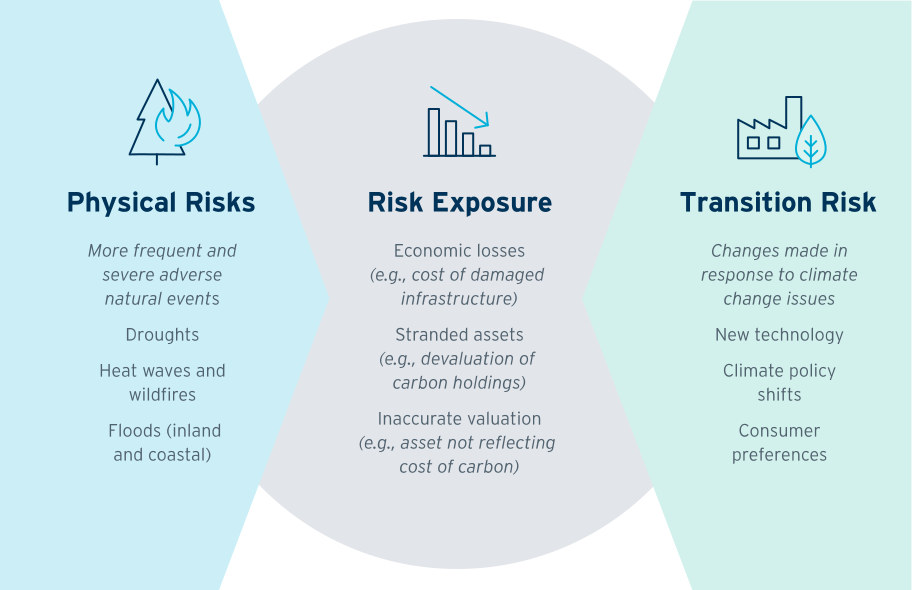
Figure 9: Climate-related risks as categorized by the TCFD
(Source: GAO analysis of reports from Mercer and Task Force on Climate-related Financial Disclosures (May 2022))
In this section of the guide



Explore all sections of the guide


Reporting template and tools
ESG reporting template ESG life cycle tool SFDR tools TCFD tools Timelines


Mapping of voluntary frameworks and standards
Definitions and distinctions Who is who Scope of information

Deep dive for VCs and investors
ESG reporting from a VC perspective ESG reporting from an investor perspective