Regulatory mapping – an introduction

Over the past five years there has been a considerable increase in legal and regulatory initiatives put forward by the European Union to connect finance with sustainability and to tackle the climate crisis. The EU is often considered – and strives to be – at the forefront of international efforts to combat climate change and in developing a financial system that can support and promote sustainable growth. Today the European Union is strongly promoting the shift to a modern, resource-efficient and competitive economy.

Sustainable Finance Strategy
The shift, needed to achieve the EU’s climate and sustainability objectives, requires finance to play a critical role: channelling investment towards sustainable economic growth and funding the transition. Therefore, an essential task for EU policymakers is to create an environment which facilitates and stimulates such private and public investments.
Since 2018, the European Commission has been implementing a threefold sustainable finance strategy, aiming to:
reorient capital flows towards a more sustainable economy,
mainstream sustainability into risk management, and
foster transparency and long-termism.

EU Taxonomy
A centrepiece of this strategy is the establishment of the EU Taxonomy – a common EU-wide classification system for economic activities to be considered environmentally sustainable. This classification is intended to promote and facilitate sustainable investment, more concretely creating security for investors, protecting private investors from greenwashing, helping companies to become more climate-friendly, mitigating market fragmentation and helping shift investments where they are most needed. The EU Taxonomy sets out six environmental objectives:
Climate change mitigation
Climate change adaptation
The sustainable use and protection of water and marine resources
The transition to a circular economy
Pollution prevention and control
The protection and restoration of biodiversity and ecosystems
Sustainable Finance Disclosure Regulation
Another important part of the EU sustainable development policy agenda is the Sustainable Finance Disclosure Regulation (“SFDR”). The SFDR provides for greater transparency concerning the degree of sustainability of financial products – the overall aim being to enable financial market participants to finance sustainable growth, while combatting “greenwashing” (i.e., the practices whereby companies mislead customers in how sustainable or environmentally sound they are). Two key elements of the SFDR framework are: (i) the concept of “double materiality”, i.e., the impacts of a company on people and/or the environment and the impacts of a sustainability topic on the value of the company; and (ii) the Article 6, 8 and 9 fund classification regime.
ESG disclosure and its building blocks
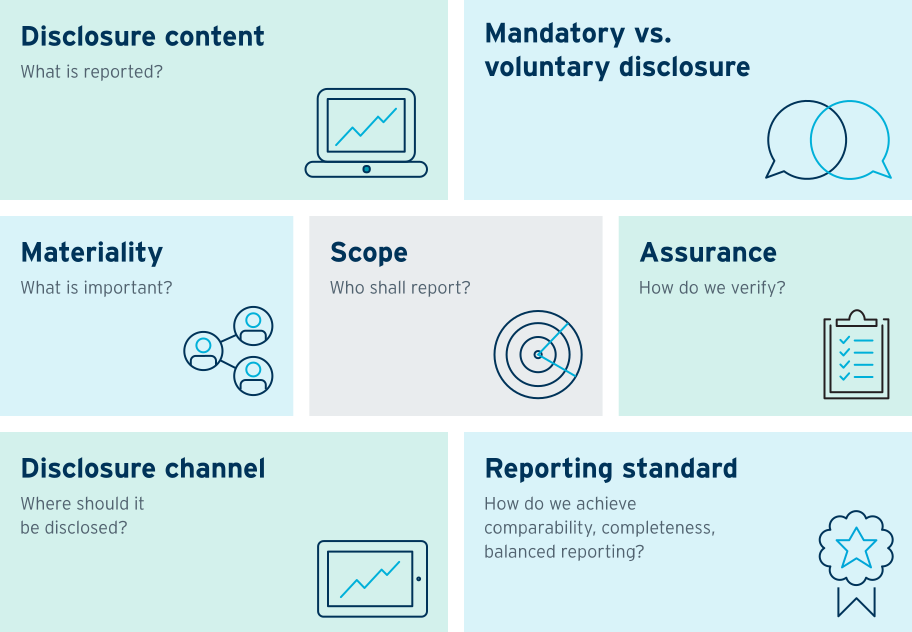
Figure 18: Building Blocks of ESG Disclosure Measures
Source: International Platform on Sustainable Finance
European Green Deal
This regulatory trend has been further accelerated following the announcement of the European Green Deal by the European Commission, setting the objective for the EU to become the first climate-neutral continent by 2050. Under the European Green Deal, the Commission set out an investment plan mobilising €1 trillion of sustainable investments over the coming decade. Another important initiative under the Green Deal is the European Climate Law, which enshrined into EU law the 2050 climate-neutrality objective, i.e., setting a binding target of net-zero emissions by 2050.
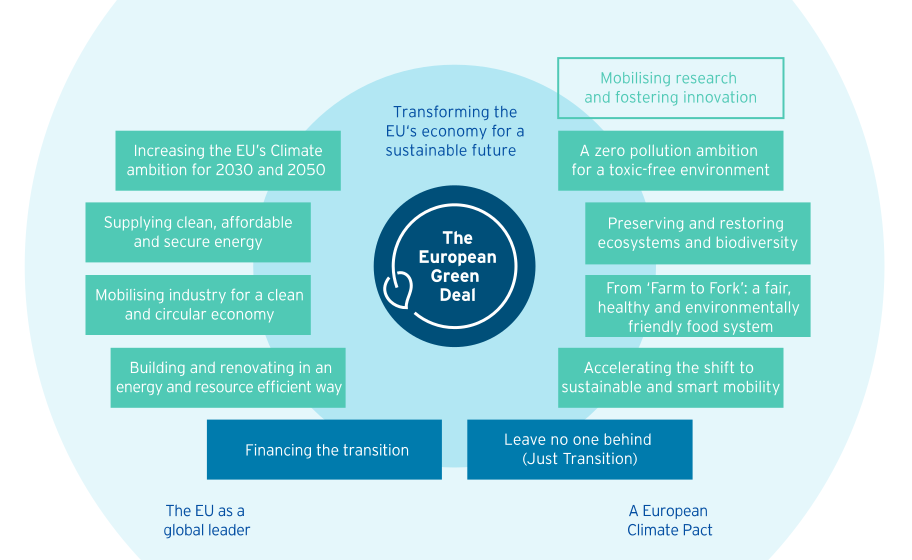
Figure 19: The European Green Deal
Source: Communication from the European Commission – The European Green Deal (December 2019)
Following the Commission’s revision of its sustainable finance strategy, 2021 witnessed a number of important new initiatives to help improve the flow of money towards financing the transition. Besides the four finance-related policy areas of transition finance, inclusiveness, resilience, and global ambition (see image below), the Commission proposed the ‘Fit for 55’ package in July 2021 – a revision exercise targeting the entire EU 2030 climate and energy framework, addressing legislation on Effort Sharing, land use and forestry, renewable energy, energy efficiency, emission standards for new cars and vans, as well as taxation. All to advance the objective of reducing net greenhouse gas emissions by at least 55% by 2030, compared to 1990 levels.
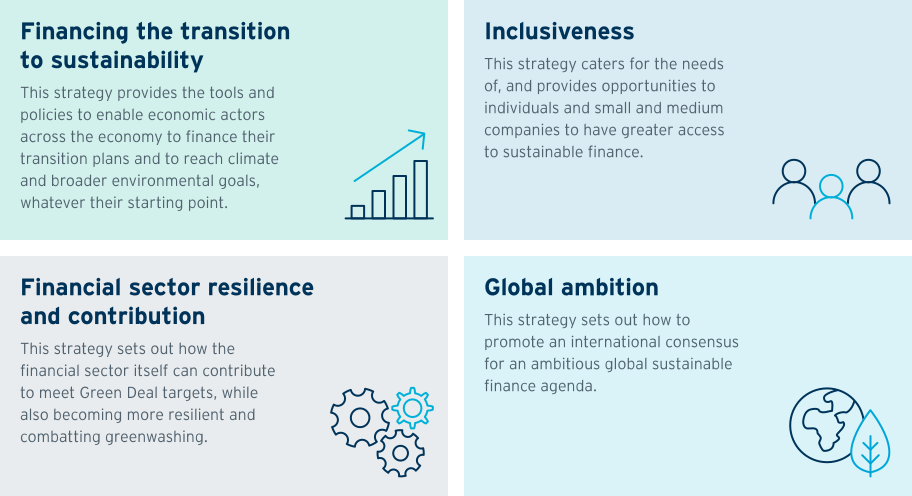
Figure 20: Four main areas where additional actions are needed for the financial system to fully support the transition of the economy towards sustainability
Source: Communication from the European Commission – Strategy for Financing the Transition to a Sustainable Economy (July 2021)
Corporate Sustainability Reporting Directive
In addition, the non-financial reporting framework for corporates has been revisited, including an expanded scope capturing more companies and clearer standards to ensure that reliable and comparable sustainability information is provided by companies. The proposal for a Corporate Sustainability Reporting Directive (CSRD) marks an important next step in corporate reporting as it will require certain companies to disclose detailed information on the way in which they operate and manage social and environmental challenges. This will likely apply from 2024 onwards, allowing consumers, investors, stakeholders, etc. to evaluate a company’s non-financial performance. Please see the CSRD section of this guide for more information on this revised regime.
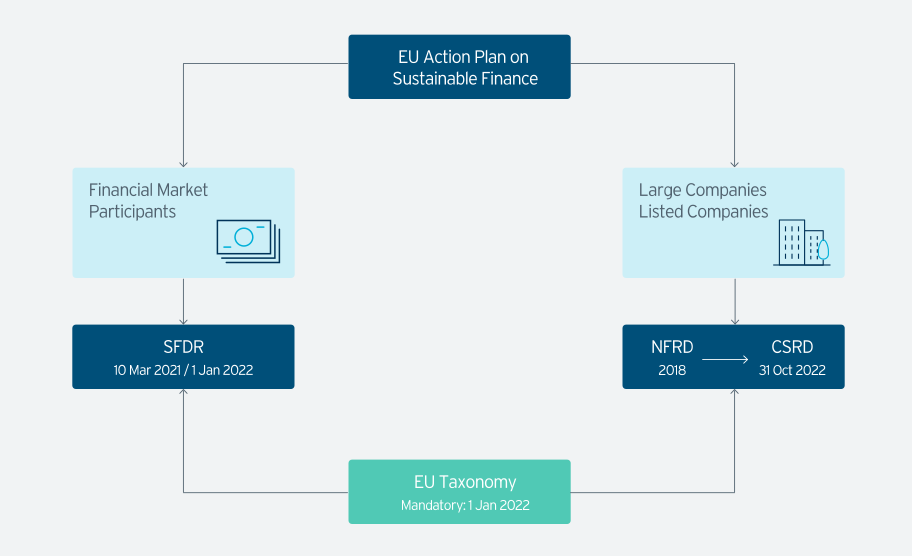
Figure 21: Interaction between SFDR, CSRD and the EU Taxonomy
Source: Turnkey
Sustainability will be further anchored in the legal framework of the European Union, with attention being given not only to environmental issues, but increasingly also to social and corporate governance issues. For instance, in July 2021, the Commission published a guidance for EU companies, addressing the risk of forced labour within the companies’ operations and supply chains. In February 2022, the Commission tabled a corporate sustainability due diligence proposal – a new initiative which focuses on supply chain due diligence, whereby companies in the EU will have to perform audits of due diligence over their supply chain, addressing ESG-related issues.
ESG considerations arise also in mergers and acquisitions, which may take into account ways in which to maximise ESG-related synergies. In parallel, climate change litigation is growing, targeting companies with a high carbon footprint, such as oil, gas, and coal companies.
All these EU initiatives (current or in the pipeline) are likely to have a significant impact on how companies/firms approach ESG-related issues. Companies will need to carefully factor ESG criteria in their business operations, development and strategy, and will be increasingly subject to reporting and transparency obligations, with growing accountability and pressure to adopt more sustainable and ethical practices. Therefore, it is essential for companies to understand the multiple ESG-related policy initiatives and legislative proposals in the EU.
UK perspective
The EU is not alone in the field of ESG and sustainable development. The UK has also put a significant focus on sustainability. For example, the UK Government is committed to making the UK financial system the greenest in the world and to ensuring the delivery of the Sustainable Development Goals (SDGs), including by ensuring that the Goals are fully embedded in planned activity of each Government department.
Some recent key milestones include:
In October 2021, the UK HM Government published its landmark “Net Zero Strategy: Build Back Greener”, setting out how the UK will deliver on its commitment to reach net zero emissions by 2050. This was accompanied by the HM Treasury’s Net Zero Review, which provides an economic analysis of the costs and opportunities associated with the UK’s net zero transition.
Another relevant strategy published by the UK HM Government in October 2021 is the “Heat and Buildings Strategy”, which sets out how the UK will decarbonise their homes, and their commercial, industrial and public sector buildings, as part of setting a path to net zero by 2050.
In addition, the UK HM Government published “Greening Finance: A Roadmap to Sustainable Investing”. This document sets out the government’s ambition to make the UK the best place in the world for green and sustainable investment. It focuses on the first step to deliver this: ensuring that the information exists to enable every financial decision to factor in climate change and the environment.
In November 2021, the UK Government announced that the UK will be the world’s first Net Zero-aligned Financial Centre. This means UK financial institutions having a robust firm-level transition plan setting out how they will decarbonise as the UK meets its ambitious and legally binding net zero targets, and strong Government oversight of the financial sector as a whole to ensure financial flows actually shift towards supporting net zero.
In 2023 the UK will publish a transition pathway for the financial sector setting out how the sector will transition to net zero by 2050.
Meanwhile, the UK will become the first G20 country to make it mandatory for Britain’s largest companies and financial institutions to disclose their climate-related risks and opportunities, in line with the Taskforce on Climate-related Financial Disclosures (TCFD) recommendations. The TCFD reporting obligation in the UK is likely to affect many UK-regulated private equity firms, although firms with less than £5bn AUM will be exempt for the time being. Please see the TCFD section of this guide for more detailed information on this regime.
Interactions between the global and the EU dimensions of the ESG and sustainability agenda are significant and may be a source of complexity. This is the reason why greater clarity and coordination of international efforts is warranted. The EU has stepped up in that respect and aims to position itself as a global standard setter for ESG development.
International Platform on Sustainable Finance
Through the International Platform on Sustainable Finance (IPSF), the EU intends to facilitate more private investment into environmentally sustainable investments, thanks to international cooperation, exchanging on best practices and comparing initiatives related to sustainable finance.
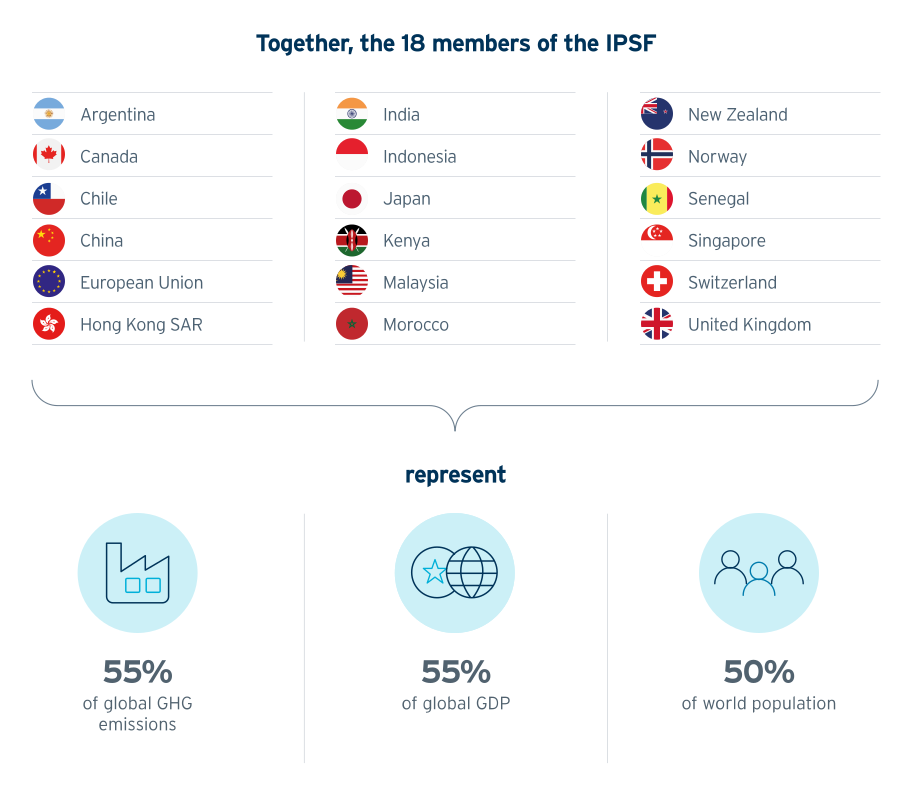
Figure 22: Overview of countries constituting the IPSF
Source: European Commission
In November 2021, the IPSF published a report “State and trends of ESG disclosure policy measures across IPSF jurisdictions, Brazil, and the US”, aimed at supporting global efforts to improve sustainability disclosures as a key cornerstone of sustainable finance, and at facilitating corresponding policy co-operation amongst members of the IPSF, and beyond.
Legislative proposals developed in the EU are likely to have wider application and may affect companies outside of the EU. Similar developments may be expected in other countries such as the UK and the US, which could in turn impose ESG disclosure and reporting requirements on EU companies.
The current wave of regulatory and cultural trends driving corporate ESG and climate-related disclosure on a European and global scale will ultimately set a new normal for companies, at all levels of the value chain. The ESG (r)evolution will require companies, faced with increasing reporting and transparency requirements, to adapt so as to integrate ESG considerations into their business strategy and to develop more sustainable and ethical practices.
This regulatory mapping aims to help companies navigate this new regulatory normal.
Explore all sections of the guide


Reporting template and tools
ESG reporting template ESG life cycle tool SFDR tools TCFD tools Timelines


Mapping of voluntary frameworks and standards
Definitions and distinctions Who is who Scope of information

Deep dive for VCs and investors
ESG reporting from a VC perspective ESG reporting from an investor perspective