How to establish an ESG policy at portfolio company level

The two key aspects of developing and implementing a good ESG policy at portfolio company level are:
what it includes – this should centre around achievable goals and targets, measured by Key Performance Indicators (KPIs); and
how an organisation will then disclose its ESG performance – this should focus on reporting and analysing anything that will impact its material operations.
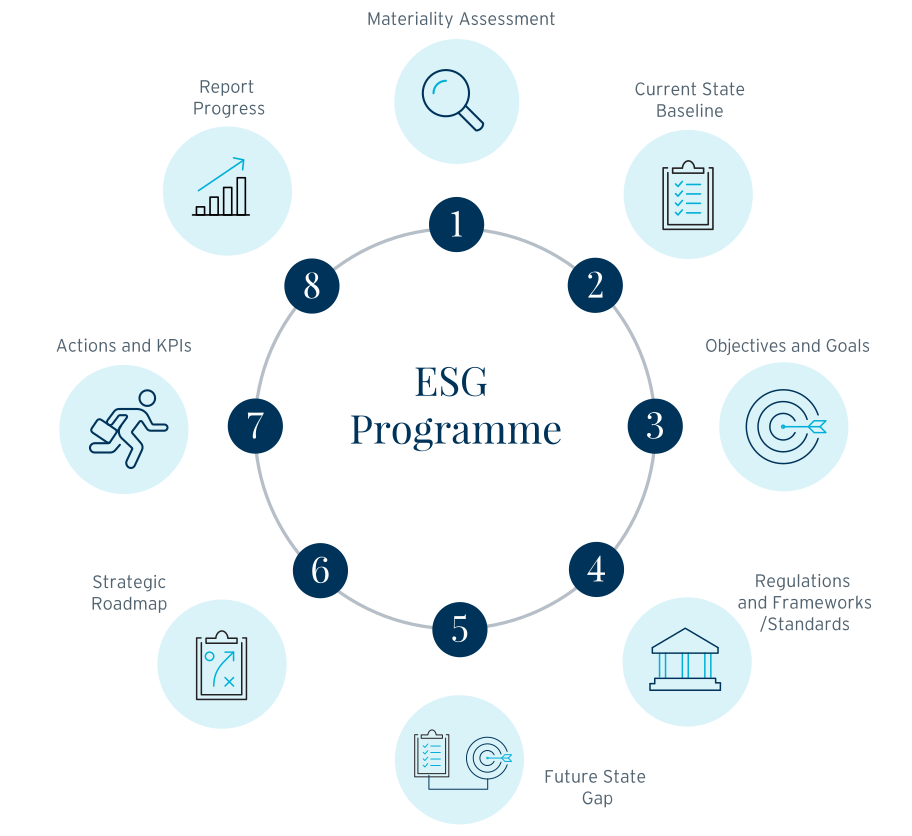
Against that background, there are a number of actions you can consider and work on with your portfolio companies when developing an ESG policy:
Assess and identify: Start by assessing and identifying which ESG factors are the most relevant and material to the portfolio company.
Consider what you already have: In tandem with step one, consider the key policies or ways of operating that the company already has in use that directly relate to those identified factors.
Set goals: With that baseline the company can then set goals for how they will continue and/or improve on their ESG performance.
Align with a framework/standard: Decide or confirm the appropriate framework and/or standard to align with in order to ensure that reporting of current and continued monitoring of performance is feasible in the long term. (See the Mapping of the ESG Ecosystem for more detail on existing frameworks and standards.)
Examine the regulatory framework: In considering current and future ESG performance, the applicable mandatory ESG requirements, i.e., the regulations, should also be kept at the forefront.
Implement policy: Once all this has been done, an ESG policy that reflects the identity of the company within the context of the economic and regulatory environment can be created and put to good use. A clear understanding of the relevant standards and regulatory requirements will facilitate the definition of actionable ESG performance objectives. These goals can be reviewed and improved on periodically as the risks, opportunities, and best practices of that market develop as well.
Indeed, in addition to the sustainability risks, it is important to consider the sustainability opportunities and potential value drivers when designing an ESG policy with your portfolio companies. Developments around technologies used by an organisation at various points in its value chain as well as changes in the profile of its consumers will inevitably present opportunities. An organisation may find that the changing market landscape allows them to alter the value proposition they present to their relevant stakeholders (from investors, to employees, suppliers, and consumers, etc.). For example, an organisation may be able to reduce its operating costs by being more conscientious and efficient with water, energy, waste management and with the materials used in its production and/or distribution processes. All in all, both risks and opportunities have a direct impact on a company’s performance financially and operationally, as well as on the overall reputation of the organisation.
Inevitably, regulation will play a certain role in determining what goes into an organisation’s ESG policy. A lot of the time, regulation can help to provide a starting point for a good ESG policy, linking potentially abstract ESG factors with material, financial risk. Most mandatory reporting will include KPIs, which will ensure that all areas (including the vaguer metrics) are easy to benchmark and compare between industry peers. In this way, investors and managers can clearly understand how an organisation’s ESG performance develops and changes over time.
In this section of the guide


Explore all sections of the guide


Reporting template and tools
ESG reporting template ESG life cycle tool SFDR tools TCFD tools Timelines


Mapping of voluntary frameworks and standards
Definitions and distinctions Who is who Scope of information

Deep dive for VCs and investors
ESG reporting from a VC perspective ESG reporting from an investor perspective