Scope of information

ESG reporting encompasses a broad range of company information related to a myriad of performance insights. Sustainability disclosure guidance can be specific to one area of reporting (e.g., environment, social, governance, economic, or physical and/or intellectual assets) or, depending on the reporting regime, it can also focus on a number of these areas together.
The table below allows us to compare some of the most popular frameworks, standards and initiatives based on the scope of their assessment criteria. The closer to green a box is, the greater the emphasis a framework places on that group of metrics and associated disclosure topics; and the closer to red, the less emphasis.
This table was built based on computer-aided analysis to compile a master list of umbrella ESG themes covered by each of these standards, frameworks, and initiatives. For each framework the respective guidance questions or guidance discussion topics were grouped against the ESG theme they fall under to get a count. The table displays the distribution of themes coverage for each framework (in fraction/percentage, hence each column summing up to 1). Each column is weighted by the total number of questions in that framework.
This is by no means an exhaustive or perfect examination – there are more frameworks not covered here, and it would be impossible to find an absolute best fit for each metric in each framework. However, it does offer an initial overview of how broad or narrow the scopes of these frameworks, standards and initiatives are.
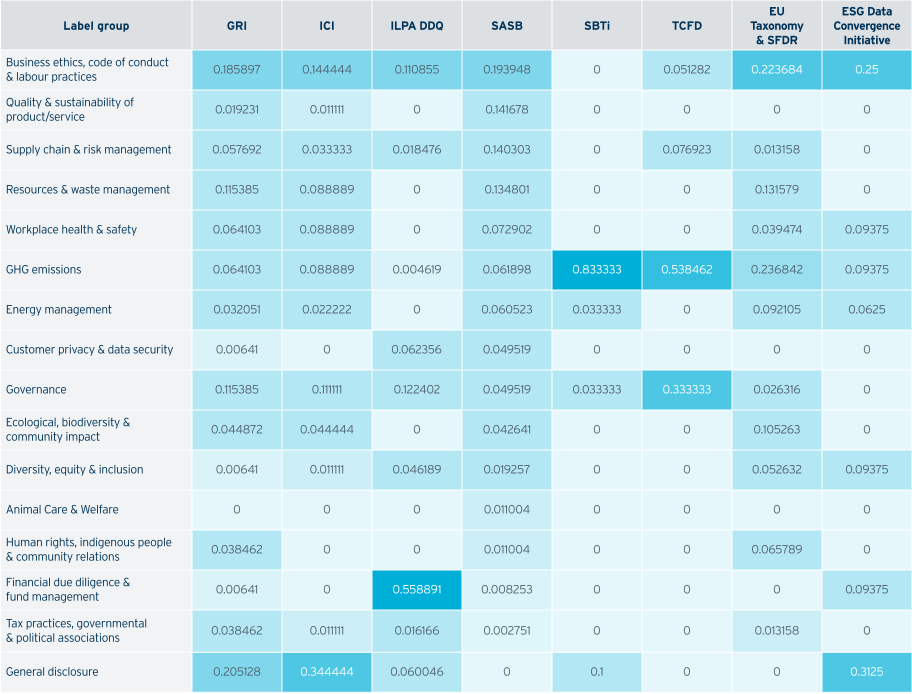
The main conclusion to be drawn here is that, across most groupings that are covered by a few frameworks, the weighting given is relatively similar overall. This qualifies Berg et al.’s 2019 analysis that most of the differences between frameworks that cover a specific topic are ones of measurement rather than weighting: similar emphasis is given to a topic, and any divergence seems to come from the specific way in which the topic is assessed.
However, in terms of scope, there is a lot more variation. Standards like SASB and GRI, and to a certain extent initiatives like the ESG Data Convergence Initiative, all cover a lot of topics (though it should be noted that, as always, each industry grouping will have its own specific combination of questions and disclosure topics) without placing significant emphasis on any one more than another. Conversely, the SBTi, the TCFD framework (which is now mandatory in the UK – see the UK TCFD section of this guide) and iCI have a much narrower scope.
Explore all sections of the guide


Reporting template and tools
ESG reporting template ESG life cycle tool SFDR tools TCFD tools Timelines


Mapping of voluntary frameworks and standards
Definitions and distinctions Who is who Scope of information

Deep dive for VCs and investors
ESG reporting from a VC perspective ESG reporting from an investor perspective